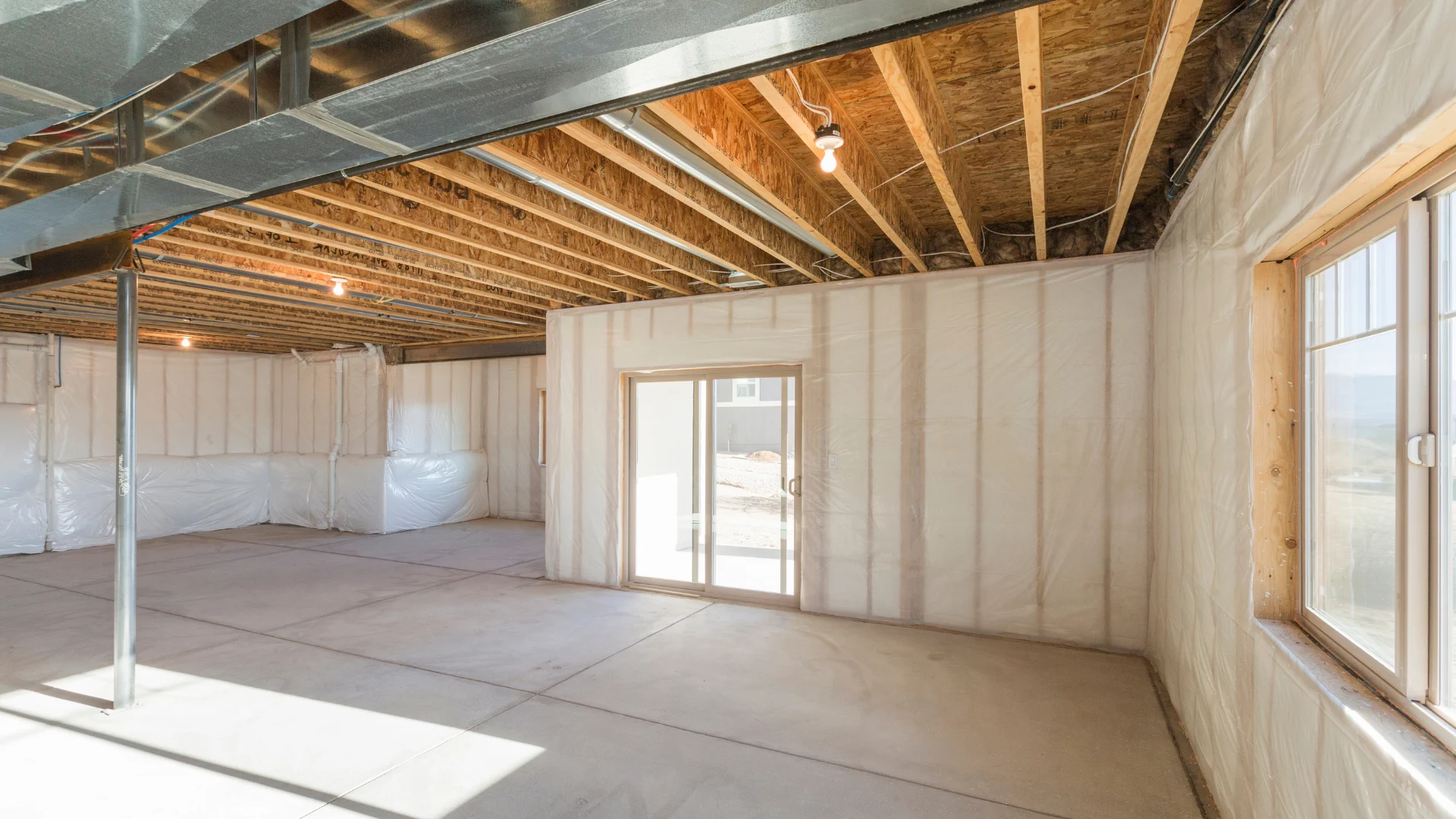
A finished basement is one of the best ways to add real living space in Brampton, and depending on what you build down there, it can also become a legal source of rental income. The tricky part for most homeowners is the price. A basement renovation in Brampton can run anywhere from $45,000 for a simple recreation room to well over $150,000 for a fully legal secondary unit, and the gap between those numbers comes down to a handful of decisions you make before the drywall ever goes up.
This guide breaks down what actually drives the cost, what each type of basement finish runs in 2026, and what Brampton’s permit rules mean for your budget and your timeline. If you’re weighing the same questions in Mississauga, the same principles apply, with a couple of local differences noted further down.

What Actually Drives The Price
Before anyone talks about flooring or paint, the real cost driver in a Brampton basement is what’s happening behind the walls. Many bungalows built through the 1960s and 70s in this city sit on concrete block foundations, and those foundations move with frost and crack in fairly predictable places. Add the heavy clay soil common across Brampton, which holds water against the foundation instead of letting it drain away, and you get a recipe for a damp or actively wet basement.
A dry basement is cheap to finish. One with a water problem is not. Interior weeping tile, a sump pump upgrade, or crack injection can add $15,000 to $35,000 before a single stud goes up, and skipping that step is the single most common reason a basement renovation fails a few years later. If your lot sits near a creek or in an area that floods, a backwater valve is a small additional cost that prevents a much bigger one down the road.
A simple test can tell you a lot before you even call a contractor. Tape a sealed two foot square of plastic to the floor and another to a wall, leave both for 72 hours, then check the underside for condensation. If moisture shows up, it needs to be dealt with before framing starts, not after.

Three Ways To Finish A Basement, And What Each Costs In 2026
Most Brampton basement projects fall into one of three categories, and the price climbs quickly as the scope grows.
- Recreation finish. A rec room, maybe a powder room, nothing structural beyond framing and finishes. Typically 700 to 1,000 square feet, three to five weeks of work, and $45,000 to $75,000.
- Basement apartment. A bedroom, a full bathroom, and a kitchenette built for multigenerational living rather than a registered rental. Six to ten weeks, and egress windows plus interconnected smoke alarms become mandatory. Budget $80,000 to $125,000.
- Legal secondary unit. A fully registered rental apartment. Eight to twelve weeks of construction plus permit time, with a 45 minute fire rated separation between units, a fire rated suite door, a separate exit, and dedicated alarms in each unit. Expect $115,000 to $190,000, but a unit built to code is also insurable and adds real resale value, which an unregistered basement apartment does not.
Rental demand for legal basement apartments is high across Brampton, which is why the legal secondary unit option keeps showing up as the right call even at the higher price point. An uninsured, unpermitted unit can void your home insurance entirely and draw a municipal order to remove it, so the extra cost upfront is often cheaper than the alternative later.

Permits And Code In Brampton
Ceiling height catches a lot of older Brampton bungalows off guard. Ontario’s building code wants 6 feet 5 inches of clearance under beams and 6 feet 11 inches in living areas, and plenty of homes built decades ago fall short. If yours does, the fix is underpinning the foundation or building bench footings, and either one needs to be priced and permitted before the rest of the project is scoped.
A secondary suite pulls plumbing and electrical work into the same permit as the framing, since the fire separation and the new kitchen and bathroom all have to be inspected together. Trying to do this piecemeal, or without a permit at all, is the fastest way to end up with a basement you can’t legally rent or insure.
A Note For Mississauga Homeowners
The same cost drivers apply just south in Mississauga, with one addition. Older bungalows in neighbourhoods like Cooksville and Applewood sit on the same kind of clay soil, so a moisture and foundation audit still comes first. But homes in Lorne Park, Mineola, and parts of Erin Mills near the Credit River fall under Credit Valley Conservation’s jurisdiction, and any walkout, excavation, or grading near a ravine needs their sign off before work can start. It’s worth checking early, since that approval can add real time to a project schedule.
Ways To Keep The Budget Under Control
A few habits separate the basement projects that stay on budget from the ones that don’t.
- Get the moisture and foundation audit done before you price anything else. It’s the one number that can change the entire scope of the project.
- Decide early whether you want a rec room or a rentable suite. Adding a kitchenette or a second exit partway through a project costs far more than planning for it from day one.
- Keep plumbing and electrical work grouped under a single permit rather than adding them piecemeal later.
- Ask your contractor for the ceiling height measurement early. If underpinning is needed, that changes both the price and the timeline, and it’s much better to know in week one than week six.
Frequently Asked Questions
Is a legal basement apartment worth the extra cost in Brampton?
Given how strong rental demand is here, usually yes. Building to code means the unit is insurable and rentable, while an unregistered apartment is a liability that can void your coverage.
How long does a basement renovation take in Brampton?
A simple recreation finish runs three to five weeks. A basement apartment takes six to ten weeks, and a legal secondary unit runs eight to twelve weeks of construction on top of permit approval time.
Do I need a permit to finish my basement in Brampton?
Yes, for any project that adds a bathroom, a kitchen, a bedroom, or changes the electrical or plumbing systems. A permit is what makes a secondary suite legal, insurable, and safe to rent.
How do I know if my basement is dry enough to finish?
Run the plastic square test described above, or ask your contractor to check for it during your quote. It’s a simple way to catch a hidden water problem before it becomes an expensive one.
Ready to Get a Real Number for Your Basement?
Every basement in Brampton looks a little different once you factor in the foundation, the soil, and what you actually want the space to do. Our Brampton basement renovation team can walk your space and give you an accurate quote instead of a range.
Mississauga homeowners can find the same detail on our Mississauga basement renovation page.