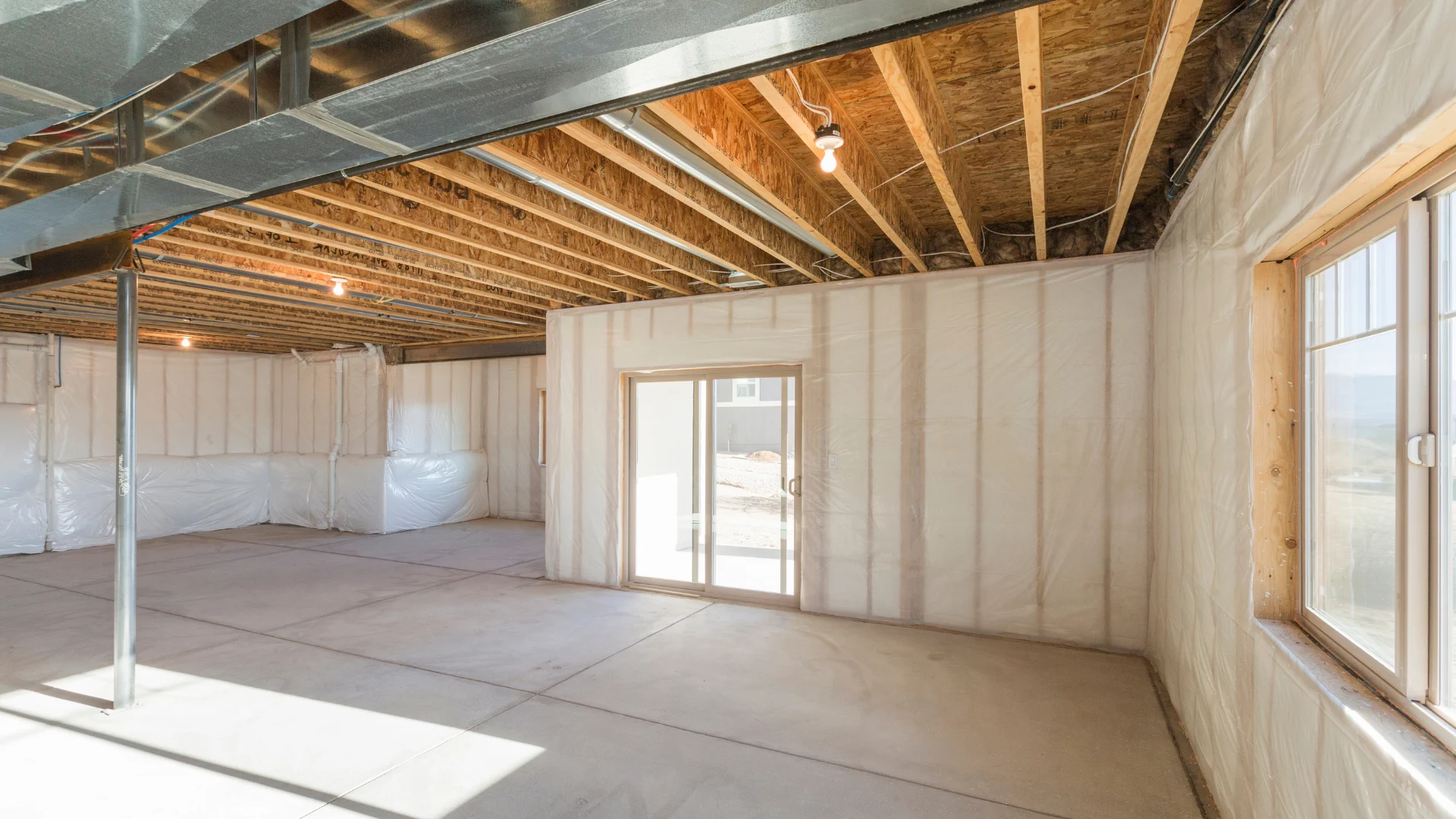
Basement space is the cheapest square footage you’ll add — and in Hamilton, with two universities’ worth of rental demand and a stock of older homes, a finished basement or a legal suite is often the best return in the house. But it’s also where skipped steps cost the most: the moisture management, framing, and code underneath the drywall decide whether the space lasts or rots.
Moisture first — and Hamilton’s range of foundations
Before framing, we audit foundation cracks, slab condition, drainage, downspouts, and water history. Hamilton spans a wide range of foundations: century homes in the lower city sit on stone or rubble foundations that need different waterproofing than poured concrete; Mountain homes take escarpment runoff; and properties near the harbour and bayfront can have a high water table. A dry basement is cheap to finish; one with water issues needs interior weeping tile, a sump upgrade, or crack injection first — $15,000 to $35,000 that never shows but decides whether the finish survives. Parts of Hamilton also have radon potential, which we test for and mitigate where readings warrant.
Three project types — and the student-rental angle
Recreation finish — rec room, maybe a powder room. Three to five weeks.
In-law suite — bedroom, full bath, kitchenette. Six to ten weeks. Egress windows and interconnected alarms become mandatory.
Legal secondary unit — a registered rental, in strong demand near McMaster and Mohawk. Eight to twelve weeks plus permits: 45-minute fire separation, a fire-rated suite door, a separate exit, and dedicated alarms. Built to code, it’s both income and resale value — and an unregistered student rental is a liability that can void insurance and draw City orders.
What it costs in 2026
- Recreation finish (700–1,000 sq. ft.) — $44,000 to $72,000.
- In-law suite — $78,000 to $122,000.
- Legal secondary unit — $112,000 to $185,000.
Full code detail is on our basement renovation page. Ceiling height trips up older lower-city homes — code wants 6’5″ under beams and 6’11” in living areas, and many century-home basements fall short, meaning underpinning or bench footings.
Frequently asked questions
My downtown home has a stone foundation — can the basement still be finished?
Yes, but stone and rubble foundations need a tailored waterproofing approach and often parging and drainage work first. We assess the foundation type during the moisture audit and recommend accordingly.
Is a legal student rental worth it?
Near the universities, usually — but it must be a registered, code-compliant unit to be insurable and to avoid municipal enforcement. We build to that standard.
A suite’s bath and kitchenette bring in our plumbing and electrical crews under one permit.